Room spray bottle
Liquid, pump, actuator, leak path and user-use directions

You choose the branding and packaging direction. LAEYO coordinates the agreed bottles, closures, labels, cartons and equipment options with the product, liquid and filling scope; actual materials and artwork still need approval.
 CONCEPT VISUAL
A room spray relies on its dispensing and closure assembly, a reed refill relies on liquid contact and transfer conditions, and a system cartridge may require a proprietary interface. Build the concept around the real handling sequence rather than putting every liquid into the same generic bottle. This category-level comparison only frames questions; product-specific volumes, materials and available finishes belong on validated product detail pages.
Liquid, pump, actuator, leak path and user-use directions
Container, closure, pouring interface and contact period
Geometry, connector, seal and hardware fit
A packaging request should distinguish the primary vessel, closures, pumps or wicks, labels, inserts, cartons and any accessory. For each item, confirm the approved component options and final deliverable through LAEYO’s project team. Confirm who is accountable for dimensional verification, component samples and final assembly. A single attractive product shot must not imply that every visible item is manufactured in-house.
Physical dimensions, material identity and source
Neck, liner, seal, sprayer or wick—the exact applicable components
Label stock, carton, insert, sleeve or gift-box parts
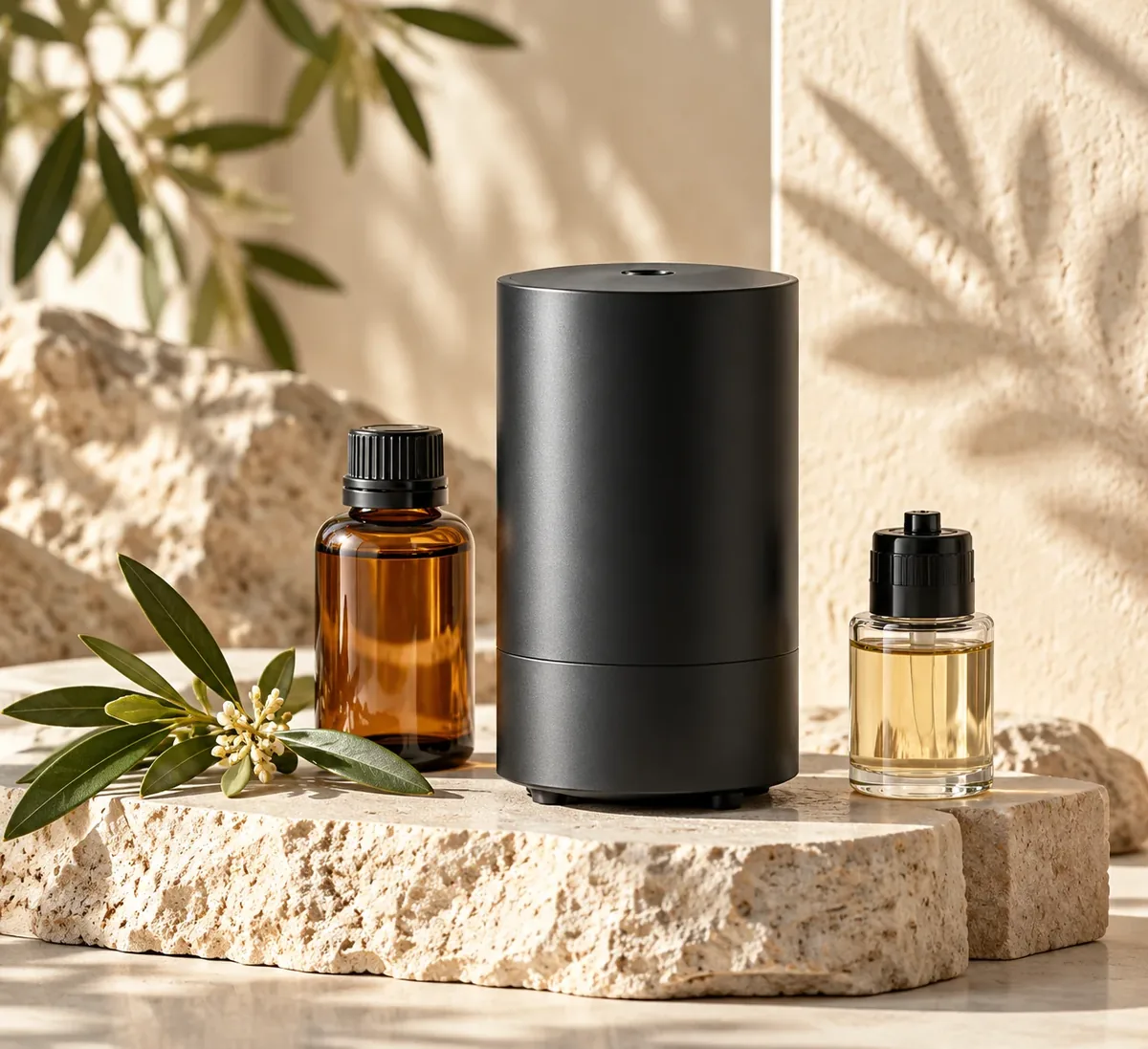
A label file that looks polished on a flat page can fail on a curved bottle, a small closure or a spray actuator. Once the actual part is selected, confirm the available print area, orientation, substrate, technique, bleed and legibility. A designer can build high-quality concepts earlier, but printable dielines, tolerances, color targets and finishing approvals require the real material and production process. Avoid showing third-party logos as LAEYO customers or proof of licensing.
Permitted logo, colour standards and copy rights
Approved dieline, print zone and label/closure clearance
Actual approved print proof or signed-off artwork revision

A visual label concept is not a production-approved dieline. Final artwork dimensions and tolerances must be checked against the selected physical component and print process.
The finished fragrance mixture may meet a bottle, seal, adhesive, liner, gasket, pump or reservoir over time. Whether a material is suitable depends on the actual composition, exposure period and conditions. A glass look or generic “PET compatible” label is not a substitute for evidence on the exact filled assembly. Ask what relevant compatibility question should be tested before finalizing a material or closure, especially when repackaging a reference liquid.
Confirmed mixture/specimen revision—not just scent name
Actual wetted component and construction
Fill, storage, dispensing and relevant contact duration
A packaging concept is not a compatible finished pack until the exact liquid, wetted parts, closure and intended conditions are considered together.
Labelling responsibilities vary with the product form, chemical classification, target market and intended consumer use. The brand and responsible specialists must determine the actual required product identification, supplier details, warnings, language, quantities and other market-specific information before final print. Graphic layout is not legal clearance. Do not assume that an IFRA-related statement replaces an SDS, hazard assessment or market-specific label review.
Exact country/region and distribution channel
Documented classification and final-use conditions where applicable
Required text, languages, warning visibility and package surface
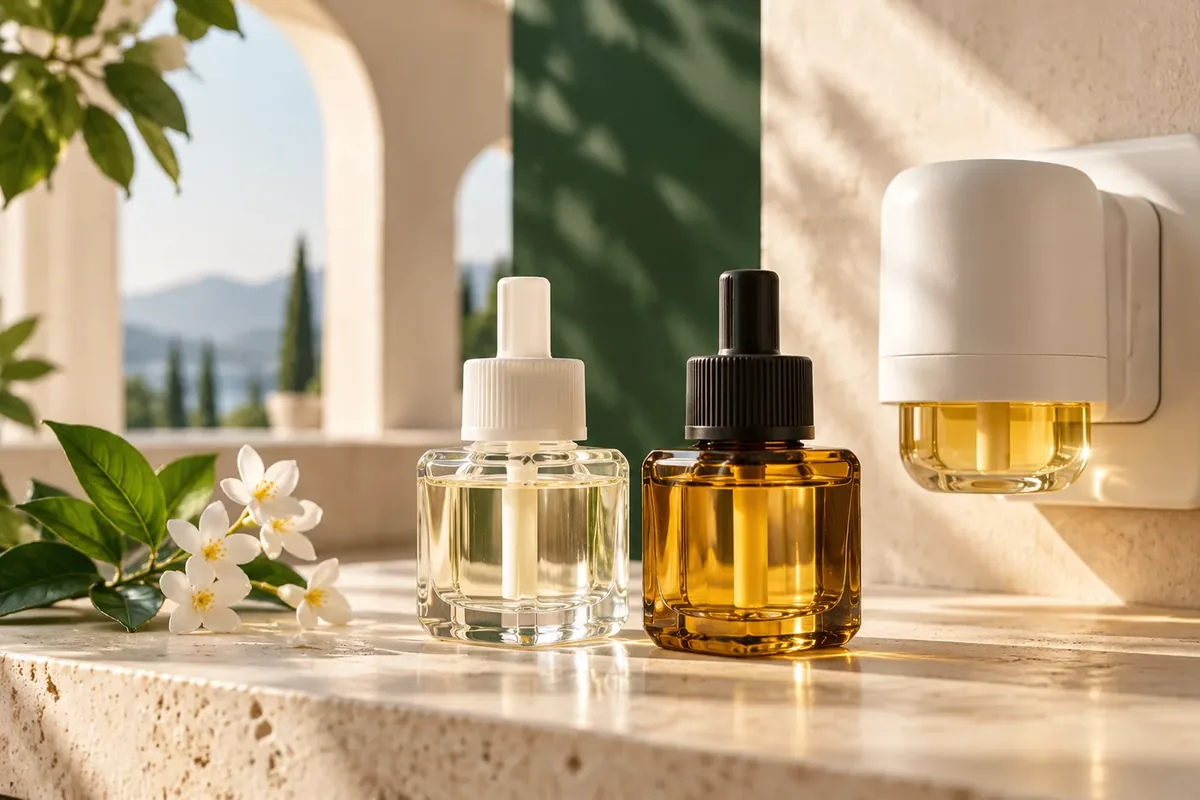
A premium hotel amenity refill, a trade-show sample and a retail-ready product may have distinct handling and display needs. Discuss cartons, tamper-related measures where appropriate, secondary packs and pack-out logic. This does not establish that LAEYO runs a specific gift-box line, provides retail compliance or fulfils individual consumer orders. State the purchase unit and how the brand intends to distribute it before choosing finishes.
Shelf communication, pack protection and handling
Identification, replenishment handling and logistics unit
Component sourcing, inserts, assembly and box dimension

For a gift presentation, identify the agreed components and finished packout, the party responsible for assembly and the finished unit proposed for quotation. Which gift products actually exist belongs to the Products category, not this service page.
A digital render, an empty container sample, a filled package trial and a printed pre-production sample answer different questions. Decide which uncertainty each prototype will address. An empty pack sample may confirm print area or grip but cannot confirm contact with the real fragrance mixture; a filled test piece may answer seal concerns without proving final artwork. The team should label samples by revision and acceptance question, not declare “approved” based on a photo.
Brand hierarchy, color direction and overall appearance
Dimensions, finish, closure and artwork fit
Contact, handling or other agreed evaluation under stated conditions
A customer’s artwork, a pre-existing bottle design, a supplier-proposed template and a newly commissioned tool or mold can have different rights and contract obligations. Clarify file delivery, brand use, tooling custody, modifications, confidentiality and whether another customer may use similar components. Displaying a real registered design or trademark does not prove the manufacturer can sublicense it. Avoid public examples that reveal a customer’s confidential brand package.
Existing logo, designs, reusable stock pack and lawful user
Artwork files, die, tooling, digital masters or other agreed outputs
Ownership or licence, reuse, term, territory and permitted production parties
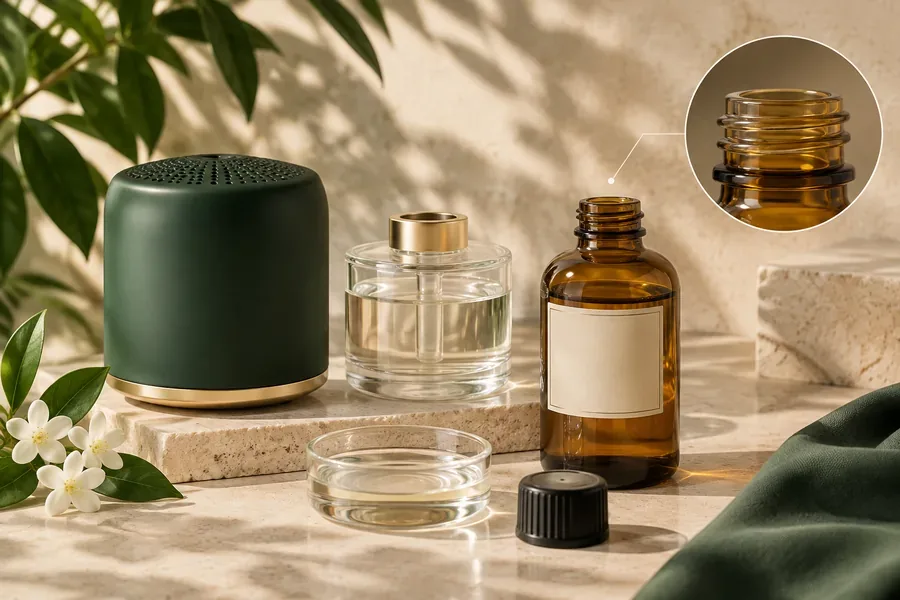
Three hypothetical brief paths prevent the discussion from becoming a broad “custom everything” promise. A brand using an existing stock bottle needs a verified closure and decoration route. A refill program needs actual equipment and vessel dimensions plus liquid contact questions. A multi-product gift presentation needs each component’s source, label ownership and assembly responsibility. These are buyer situations, not past projects, completed packages or an assertion of a currently available SKU.
Ask for the exact available container and printable area if confirmed
Ask for interface geometry, materials and filled sample evidence
Ask who supplies and assembles every specified component
An illustrative multi-piece gift packaging plan concerns component sourcing and assembly responsibility; actual candle, wax-melt or gift product availability must be established separately.
For the package that is genuinely approved, record the bill of components, drawings or item references, print files and revisions, agreed tests, inspection references and intended shipping configuration. A render alone is not a released packaging specification. If a client changes liquid, closure, print substrate or carton dimensions after approval, ask what requires reassessment. Actual production control and repeat-order processes belong on the dedicated Production & Reorders page.
Final authorized artwork revision plus proof if applicable
Container/closure/material/supply-unit facts and approved sample ID
Which changes need a new sample or documented agreement
The answers must distinguish an initial design discussion from actual packaging availability, market approval and rights. They should remain visible in server-rendered HTML and work on keyboard and touch. Avoid turning the FAQ into a generic packaging law article or claiming a Google FAQ rich-result reward.
Yes. A concept helps define direction; actual container, print area and production artwork still require physical and technical verification.
That must be confirmed for the real project. Ask which party manufactures, sources, fills, labels and assembles each part.
No. Exact component references and sourcing evidence are required.
No. Actual liquid, contact material, seal and use conditions need review.
Share the intended product and market, branding rights and available container reference. Final dielines and regulatory copy are later approval items.
No. Physical fit, material interaction, decoration and any required tests need the appropriate actual prototype.
Responsibilities must be agreed and assessed against the actual product and market with competent compliance advice.
No. It addresses a different purpose from SDS, test records and jurisdiction-specific labeling.
Only with your lawful right to use it and an agreed scope of use by the agreed project scope.
Not automatically either party. The actual contract should clarify ownership, custody, use and reuse.
No. Meaningful conclusions require testing the actual liquid and assembly under the specified conditions.
Describe the product, actual supply unit, proposed part and primary decision; discuss which prototype and terms are feasible for your project. **发布/SEO说明**:12 个问题按实际买家决策排列,前台可用原生 `<details><summary>…` 或展开文本;问题和短答在初始 HTML 内可抓取、移动端可访问。Google 2026 年 FAQ 富结果停止展示,因此不得把 FAQ Rich Results 列为本页绩效承诺,不创建额外FAQ管理系统。 —
Answers are based on the supplied page plan. Project-specific scope, pricing, compatibility and compliance must be confirmed against the actual project and original evidence.
Share the intended fragrance product, supply unit, proposed bottle or refilling format, the country of sale if known and the one part you most need to confirm. If you already own artwork or a vessel reference, mention it but do not upload confidential originals before appropriate arrangements. Ask which components can be discussed, supplied or tested for this actual project rather than assuming a photographed mock-up is a purchasable SKU.

You do not need to provide every technical drawing, final quantity or confidential formula before an initial discussion. Share only the project context and reference you are comfortable disclosing.
We are developing [fragrance product/form] for [market if known]. We need [filled pack / container / refill / gift presentation], and our main packaging question is [material, closure, artwork or assembly]. Could you advise what reference is needed for a feasibility discussion? Please reply via [contact].
Copying this brief does not submit an enquiry. Use the existing LAEYO Contact page for the actual request.
Each specialist page owns a distinct buyer decision. Move to the next route only when it matches the question your project needs to resolve.
Review a physical packaging or filled-pack prototype.
Sampling & Prototyping ↗The four pages share the same navigation and Contact route. Their project scope, sample availability, packaging responsibilities, production terms and evidence remain subject to actual confirmation.