
ROUTE A · NEW BRAND OR RANGE
Explore fragrance development ↗
Develop a Custom Fragrance Liquid
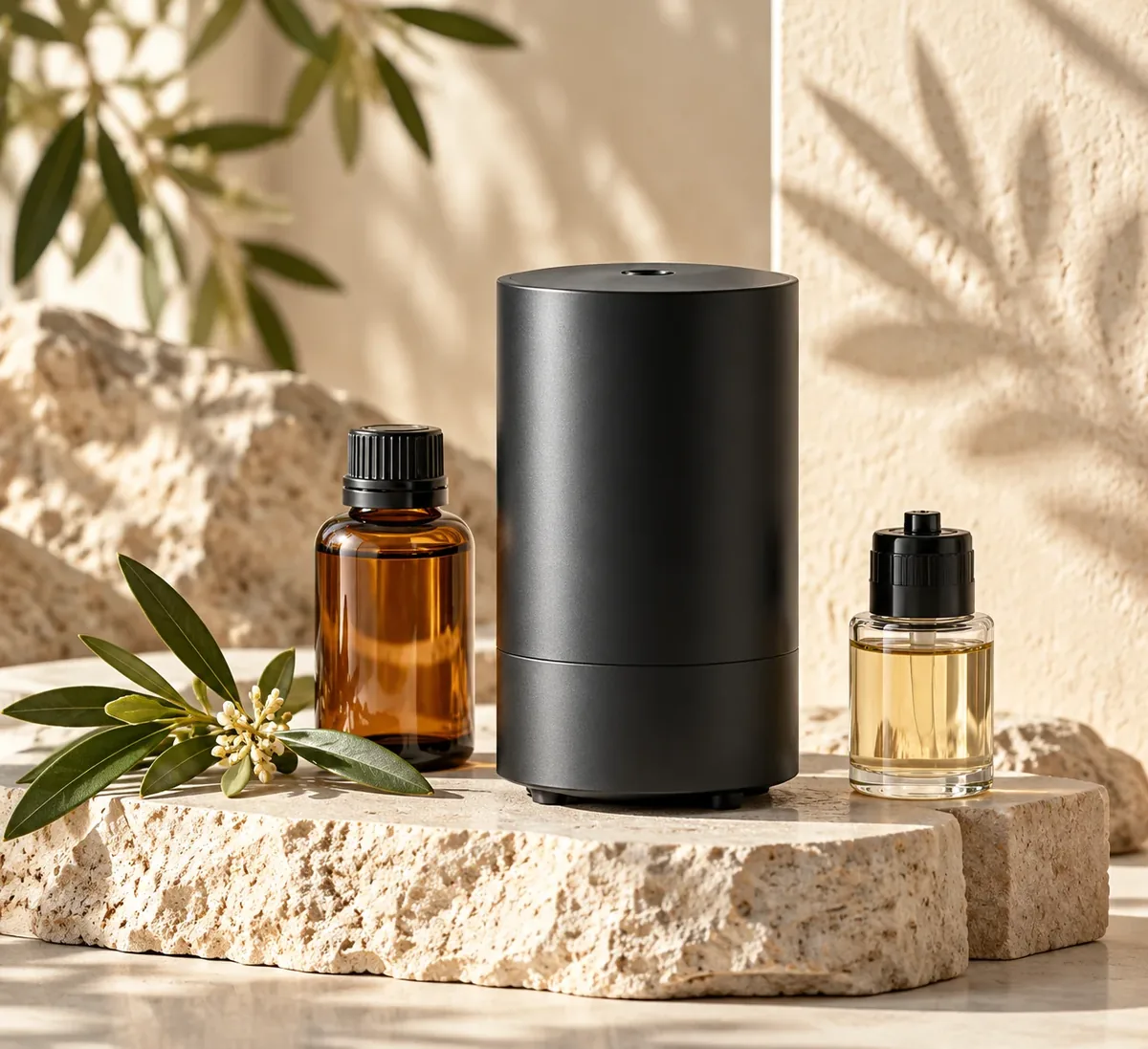
For a new brand or an existing brand developing a space-fragrance range.

Developing a home, car or commercial fragrance line? LAEYO manufactures 15 fragrance product categories, produces liquids and fills refills in-house, and coordinates private-label packaging and diffuser equipment through one project team. Start with the project details you already have.
 PROJECT-LED DEVELOPMENTBrief · Liquid · Refill · Packaging
Choose your fragrance direction, current product sample or intended format. LAEYO can then help shape the agreed OEM/ODM scope—from fragrance liquids and sampling to in-house manufacturing, refill filling and packaging or diffuser-equipment coordination. Final feasibility is checked against the actual use.
For a new brand or an existing brand developing a space-fragrance range.
For diffuser owners, distributors and buyers exploring a refill for an existing system.
Share the reference you have. The first discussion can identify the development, packaging and sampling responsibilities that still need confirmation.
These are buyer starting routes, not fixed service packages or guaranteed production offers. Project scope and suitability are reviewed individually.
Turn a scent idea into a development brief. Share the brand mood, intended space or product use, fragrance references and market requirements. The next discussion is about which olfactive direction can be evaluated for the intended medium and what sample work would be appropriate.
Clarify whether the project is a new fragrance liquid, a finished product format or a refill for an identified device.
Agree what the sample should help assess: scent direction, intended medium, use environment or a specific technical question.
Collect the target market, available packaging or device references, estimated quantity and any known timing.
After review, decide whether to refine the brief, evaluate another sample direction or request a scoped quotation.
You do not need a finished formula to describe the direction. A clear starting brief helps both sides understand the intended use and identify what needs technical review.
Clean, understated, contemporary hotel-lobby atmosphere.
A diffuser liquid for a defined reception area.
Fresh green, soft woods; an existing reference vial if available.
United States, UK or EU destination to be specified.
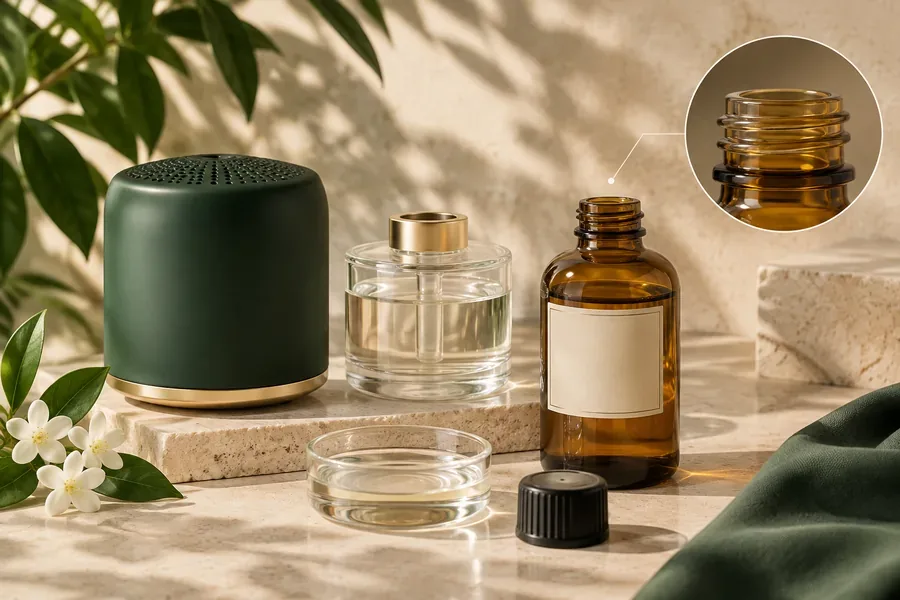 VIDEO POSTER CONCEPT
A useful first brief states the brand direction, intended application, fragrance references and destination market. Medium, packaging and performance requirements can be refined after the project scope is discussed.
A scent reference is not evidence that an identical formula or a replica can be supplied. Formula rights, confidentiality and exclusivity must be defined in the parties’ actual written agreement.
Fragrance liquid development starts with how the liquid will be used—not only how it should smell. The intended delivery method, device or carrier, material contact and destination market can change what needs to be evaluated before a final product specification is agreed.

One scent direction may lead to different liquid and delivery requirements. The actual medium, material contact, device interface and intended use must be reviewed for the specific project.
Concept illustration · Replace with verified product samples and approved technical materials before public launch.
| Buyer context | What to share first | What needs project-specific review | Review route |
|---|---|---|---|
| Waterless / nebulizing system | Device model, reference liquid, medium and container | Medium, viscosity or material contact, device suitability and any necessary verification | Device-specific review |
| Plug-in / heated release | Existing carrier, intended use and relevant materials | Heat contact, device and packaging interface, applicable verification | Format-specific review |
| Reed / passive liquid release | Reeds, bottle, opening and intended space | Base liquid, bottle interface, evaporation, stability and packaging | Carrier-specific review |
| Manual spray project | Spray use, object or space and target market | Actual production scope, spray component, label, materials and use conditions | Production feasibility to confirm |
A common scent direction can be discussed, but the finished liquid may need different medium, material or device compatibility checks for each release format. Compatibility should not be assumed without project-specific evidence.
The comparison above explains what a buyer should review. It is not a statement that LAEYO currently supplies every listed medium or has completed compatibility tests for every format.
Have a diffuser or refill container already in use? Begin with what you know. A device photo or model, the current refill medium and the intended setting are useful starting points. Material and compatibility checks—and any sampling—are assessed for the actual device and product.
You can begin with a short description. Detailed engineering drawings or a physical device sample are not compulsory for an initial enquiry.
An initial discussion can start with the diffuser model or photos, existing medium and intended use. Whether a compatible refill can be developed must be determined from the actual materials, requirements and any necessary verification.
No universal replacement claim is made. Customer equipment photos and technical details remain confidential unless the owner has explicitly authorized public use.
Packaging is part of the development brief—not an afterthought. Share the planned product use, bottle or refill concept, branding direction and destination market. Components, filling or assembly scope, printing options and labelling requirements are confirmed for the real product and supplier arrangement.
 CONCEPT 01
A clear label, bottle form and closure direction for a refill product.
Review: medium/material contact · seal · label · supply responsibility CONCEPT 02
A brand-led visual direction for the container and outer presentation.
Review: vessel · inner closure · label · destination-market requirements CONCEPT 03
A practical concept for identifying replenishment formats and pack information.
Review: actual refill format · label · batch and logistics conditionsPackaging concepts can be designed early, but material, closure, filling, labelling and transport requirements should be confirmed against the intended liquid and market before a final production specification is agreed.
A clear project path helps you know what to prepare and when decisions are made. The stages below explain a typical discussion sequence—not an audited LAEYO SOP or a guaranteed delivery schedule.
Four steps to get your sample started: share the brief → choose scent and intended format → confirm sample fees and shipping → receive and evaluate the identified sample. See Sampling & Prototyping ↗
Actual finished-product scope, component manufacturers, specifications and destination-market documents are confirmed for each project and disclosed accurately where required. Coordination does not mean every component is manufactured in the same facility.
Describe the scent, liquid, device or packaging direction and intended market.
Outcome: information still neededDiscuss the actual medium, materials, product scope and available information.
Outcome: review scopeAgree whether a suitable sample route exists, plus fees, freight and responsibilities.
Outcome: sample termsReview samples, any necessary checks and the specification to be approved.
Outcome: agreed scopeConfirm the real product, packaging, quantity, price and delivery conditions.
Outcome: quotation & termsProceed only under the agreed, executable order and documented responsibilities.
Outcome: supply planThe parties typically need to clarify feasibility, sampling terms, an approved product and packaging specification, quotation terms and any relevant testing before a production commitment. The actual sequence and responsibilities must be agreed for each project.
Review product samples, the relevant development or production process, applicable documents and practical factory-verification options as they become available. Each record should state its scope and what it does—and does not—prove.
When authentic records are available, they should identify the company, product, process, date and applicable scope. A general facility image alone does not prove a product-specific test or device compatibility.
Real sample identity, label, version and use context can establish that a particular sample exists.
Does not prove: every category is in production or every device is compatible.Authorized footage can show the company, process and activity actually visible in the record.
Does not prove: a specific certification, capacity or test result.A real document should identify the subject, method, issuer, date and scope.
Does not prove: universal compliance or an “IFRA-certified factory”.A real video tour or visit route can help verify an entity and the locations or processes actually shown.
Does not prove: automatic product performance or order capacity.You do not need a final quantity, device model or packaging drawing to begin. A short description and a reliable way to contact you are enough to start a useful discussion.
Share what you know now. The remaining product, technical and commercial details can be clarified after the initial scope is understood.
Optional details include scent references, existing liquid or device information, packaging artwork, estimated first-order volume and target launch timing.
We are developing a [space fragrance liquid / diffuser refill / private-label fragrance project] for [home, hospitality or commercial application]. Our target market is [country, if known]. We can share [scent reference / device or container information / packaging artwork] where available. Please advise what you would need for an initial feasibility, sampling and quotation discussion. Our final quantity and packaging details are not yet fixed.
Sample scope, charges and international freight are clarified for the actual project; they are not automatically free.
Formula ownership, confidential information and exclusivity must be agreed in writing.
MOQs, pricing and schedules depend on the approved liquid, container, packaging, volume and verification needs.
An agreed sample and specification help define production checks and future replenishment discussions.
A brand has a scent direction and target market, but has not selected a final vessel. The first discussion concerns intended medium, references and possible sampling scope.
Illustrative buyer scenario — not a completed LAEYO customer project
A distributor already has diffuser equipment and wants to explore a refill. Device details and the current medium help identify what requires review.
Illustrative buyer scenario — not a completed LAEYO customer project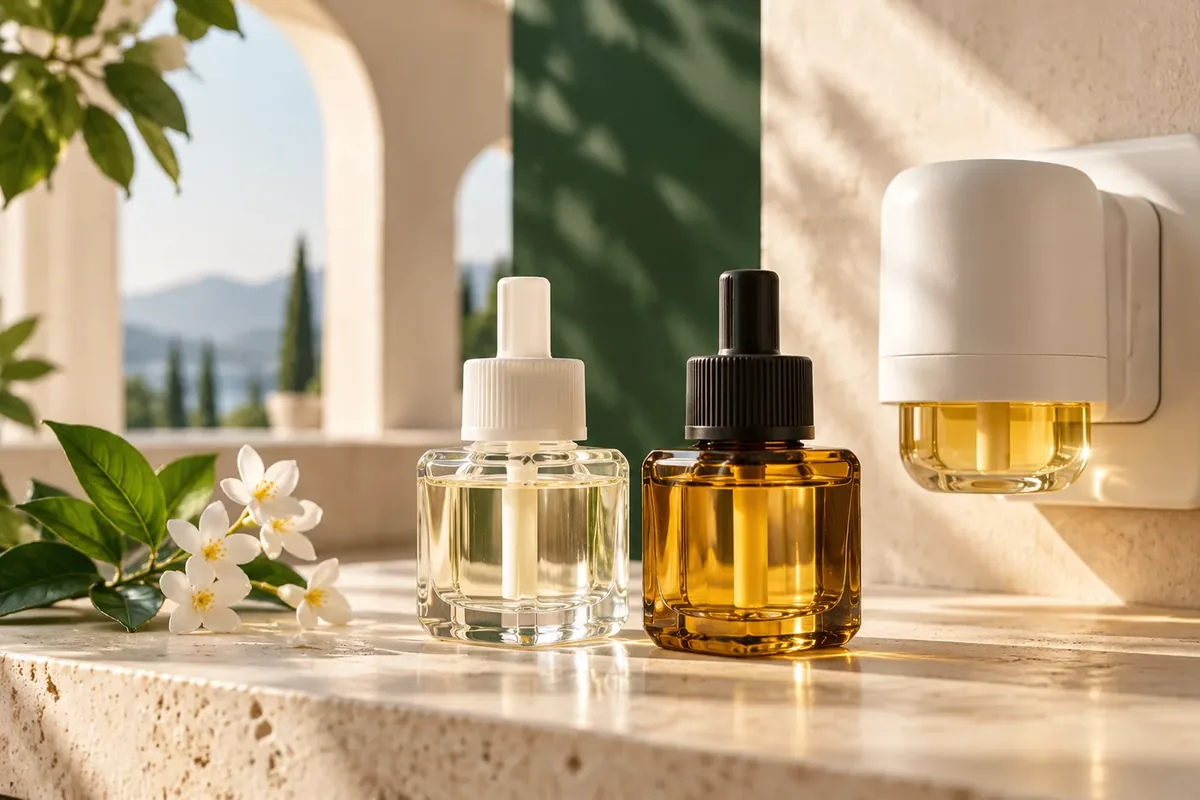
A brand has a label concept and needs to discuss its bottle, closure and packaging scope, destination and actual supplier responsibilities.
Illustrative buyer scenario — not a completed LAEYO customer projectSampling fees, freight, MOQ and lead time depend on the agreed product, packaging and order requirements. They are confirmed through the actual project quotation and agreement.
Share Your OEM/ODM Brief ↗Clear, conditional answers to the commercial questions that often remain after a buyer has chosen a project direction.
The terms are used differently across suppliers. The practical distinction is the agreed responsibility for the fragrance brief, formulation work, packaging and manufacturing. Your quotation and development agreement should define the deliverables rather than rely only on an OEM/ODM label.
Formula rights, confidential information and any exclusivity must be defined in the parties’ actual written agreement. A custom-development enquiry alone does not establish ownership or exclusivity.
Sampling fees and freight are discussed and confirmed for the specific project. They should not be assumed to be free or deductible unless LAEYO’s actual quotation states that.
Requirements depend on the finished product, its composition, route to market, supplier/importer roles and destination. Buyers should share the intended application and market; applicable documentation and responsibilities must then be verified for the actual product.
These are buyer-facing planning answers and must be reviewed by the relevant LAEYO commercial, technical and regulatory owners before public launch. They are not universal legal or product-compliance advice.
Explore practical topics when comparing fragrance product formats, refill interfaces, private-label packaging and quality documentation.
Choose the topic relevant to your project and follow the guide’s product or service links.

Share your intended fragrance liquid or refill requirement, the application and a way to contact you. Scent references, existing device information, packaging concepts and planned quantities are helpful when available—but you can begin before everything is final.
Send Your OEM/ODM Project Brief Review the LAEYO Trust Center ↗This page links to the existing Contact/RFQ route. It does not create a second form or claim a successful submission until the actual Contact service confirms receipt.