
 EDITORIAL CONCEPT · TEMPORARY IMAGE
Home Fragrance Testing & Compliance: A Buyer’s Evidence Guide
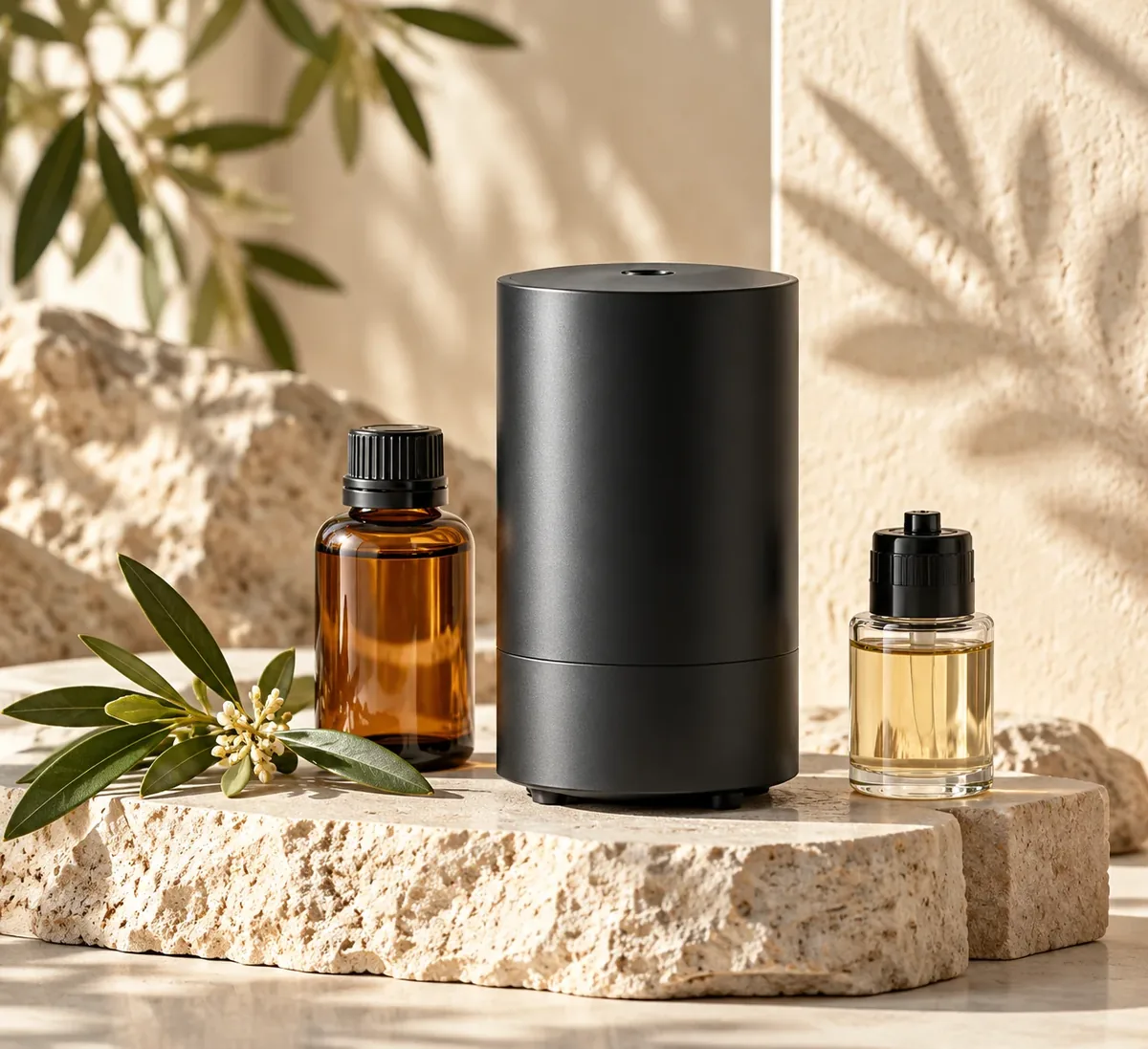
A fragrance concentrate, an actual diffuser refill, a filled room spray and a finished retail kit are not one test object. Identify the item and its intended use first; then write the buyer question, such as classification, packaging contact, reported result or labeling. Regulations and methods depend on the physical product and target territory. This page offers a structured reading method, not a market entry approval.
Educational buying guidance only. Product availability, compatibility, test evidence and LAEYO-specific scope must be confirmed for the actual project.
Know what each supplier document actually establishes
Do SDS, COA, IFRA and test reports prove the same thing?
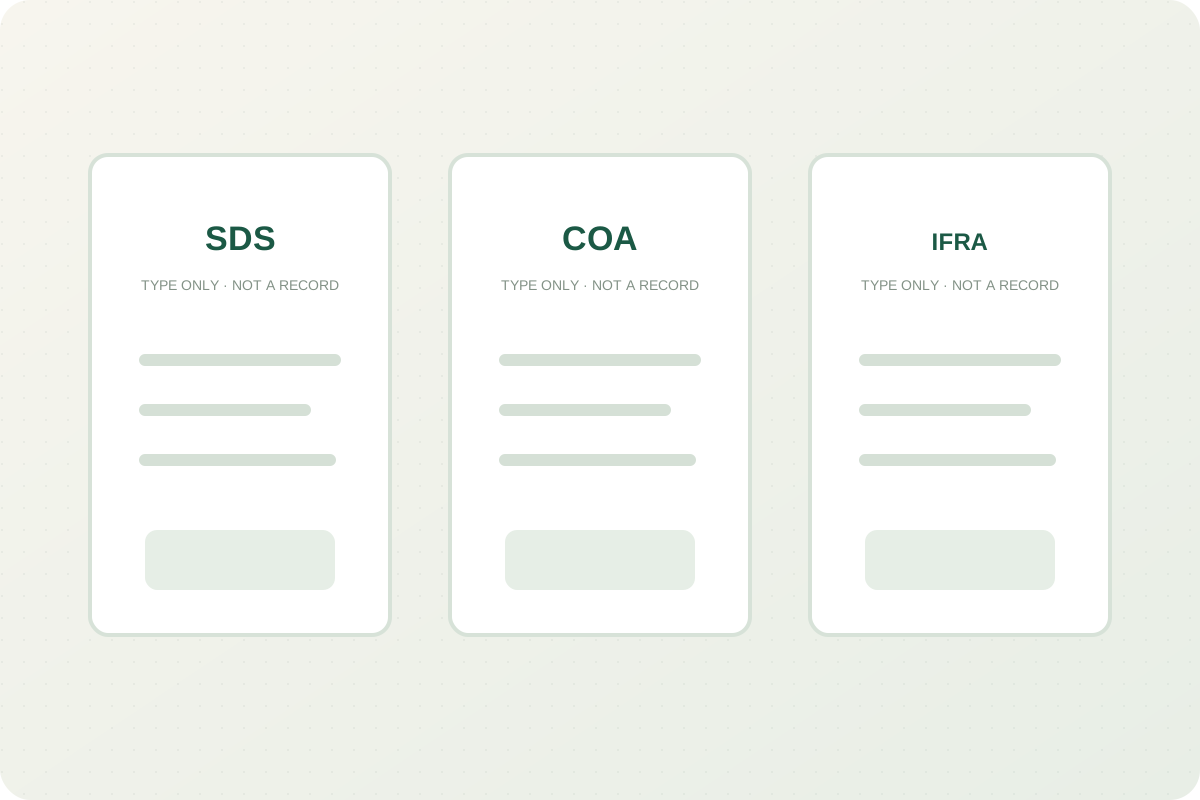
No. A Safety Data Sheet communicates chemical hazard and handling information in its applicable context; a Certificate of Analysis relates to specified measurements or checks for its identified product or batch; an IFRA conformity statement concerns a fragrance mixture for an intended use under IFRA Standards; a laboratory test report documents the specific test performed. Their names cannot be substituted for each other, and company-management certificates prove yet another scope.
Buyer requests the document that answers the real question.
Map regulatory obligations to target markets
Does EU evidence automatically answer US market questions?
EU classification and label obligations may arise under CLP for relevant chemical substances or mixtures; applicable requirements depend on the actual classification, use and supply circumstances. In the US, the Federal Hazardous Substances Act can require cautionary labeling for consumer products that meet its criteria. Neither fact means every fragrance product follows an identical checklist. Verify current laws with qualified specialists for the exact marketed item.
Buyer avoids using one generic “global approved” badge.
Trace the tested specimen to the commercial item
Does the report cover my actual refill or production batch?

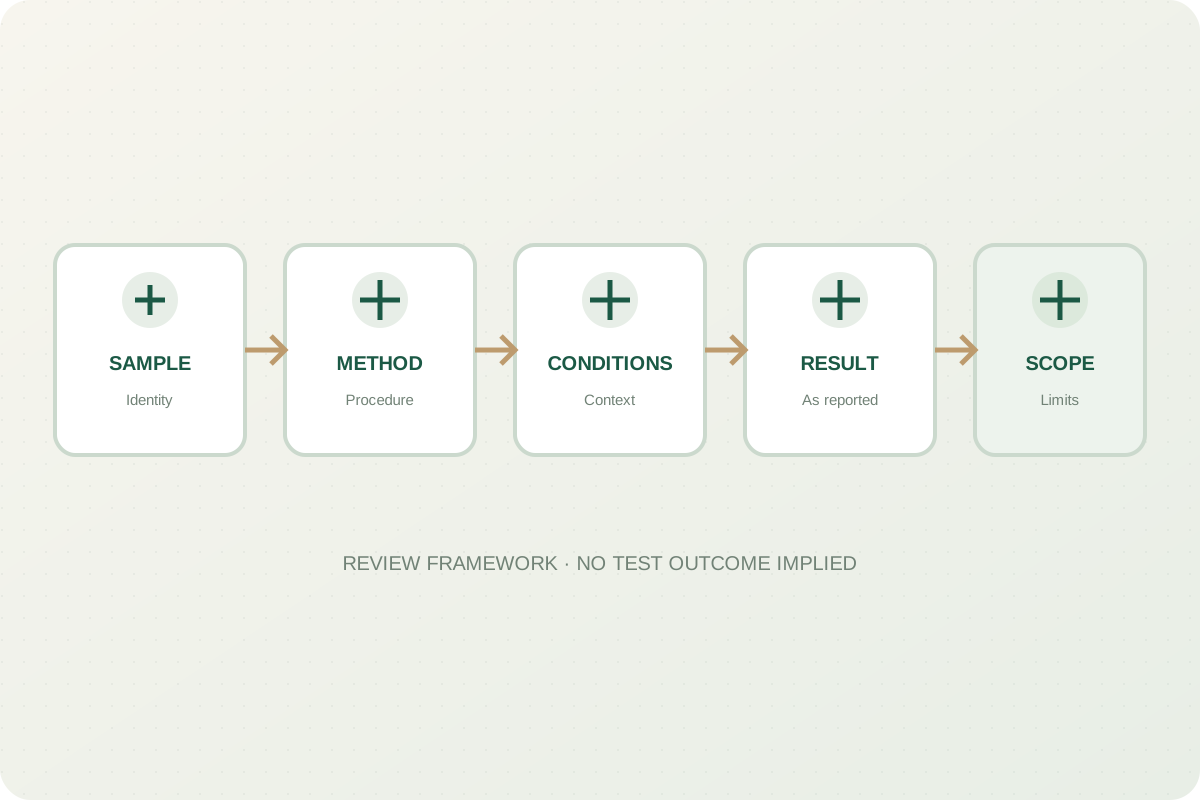
Compare the original specimen identification with the liquid revision, packaging assembly and commercial lot being discussed. A test on concentrate does not automatically become a test on a diluted finished refill; a tested sample is not proof of every future lot. A clear relationship requires real production, formulation or sampling documentation—not a visually similar bottle.
Buyer knows what the report truly covers.
Read methods and conditions before using a result
What must match between a report and intended use?
An observation is meaningful only within its recorded method, conditions and limitations. Read the actual tested material, preparation, duration, environment and acceptance basis where specified. Long-term shelf behavior, a new device or a different container may not be established by a narrow trial. Do not add unreported temperature, timing or technical standards simply because they sound credible.
Buyer can judge whether a report addresses the actual scenario.
Separate measurement, acceptance criterion and supplier claim
Is a result without “PASS” useful?
Yes. A laboratory may report measured values or observations without issuing a conformity statement. If a criterion exists, identify who defined it and whether the issuer actually applied it. Buyers may need to compare a real result against their own applicable specification, but a website must not manufacture a green PASS label or convert a supplier’s chosen limit into a governmental approval.
Buyer understands where measurement stops and a purchasing judgement begins.
Check who issued the report and what their scope covers
Does a lab logo certify my fragrance product?
The issuing organisation, exact report and relevant laboratory competence or accreditation statement are separate things. If accreditation is claimed, verify the issuing laboratory and applicable activity through the responsible accreditation body; a general international cooperation page is not a certificate for an individual product. ISO/IEC 17025 relates to laboratories, not an automatic approval mark on the tested fragrance.
Buyer does not confuse authority, issuer and actual product result.
Review final packaging and hazard communication
Why does a bottle label require its own review?
A marketing claim, use instruction, signal word and hazard statement may have different source and approval responsibilities. For applicable EU/EEA hazardous mixtures, UFI/poison centre duties can be relevant, but a UFI is not evidence that a product is universally safe or approved everywhere. The packaging team needs the actual market, formulation status and responsible economic operator information before final artwork release.
Buyer requests a reviewed actual label rather than assuming draft artwork is compliant.
Understand transport and import evidence as separate work
Does a product SDS automatically settle shipping or customs?
Supplier hazard documentation may help inform transport classification, but it is not a substitute for shipment-specific assessment or the receiving market’s import requirements. Shipping mode, packaging, declared goods and responsible parties may change the documentation needed. Ask for actual logistics classification and market advice; do not use a blanket “non-dangerous” or “worldwide ship-ready” line without evidence.
Buyer knows what remains outside a laboratory report.
Assess changes before recycling an old compliance claim
If formula or packaging changes, what happens to evidence?
A new formula, closure, intended use, market or label claim can alter which source statements remain relevant. An artwork color change alone is not automatically equivalent to a chemical re-test; a major liquid or contact change may require additional professional review. Compare old versus proposed facts, then scope new evidence. Do not promise automatic expiry or unchanged applicability in all cases.
Buyer sees why one record may not cover a modified product.
Assemble a supplier-document request that gets answers
Use a concise checklist: actual product and revision, market, intended use, exact claim or test question, original source and whether the record can be shared. Customer-specific or proprietary reports may be confidential. Public material should link to authorised originals; a restricted item can be discussed through Contact without inventing a downloadable PDF or forcing an unrelated sign-up gate.
Check evidence behind each sourcing recommendation
Use product-specific documents, relevant original guidance and confirmed market requirements when evaluating a proposed fragrance format or supplier.
Read current official sources and substantive guide articles
This topic hub should present truly published, reviewable articles by product question and jurisdiction, not AI-generated legal summaries disguised as regulator instructions. Point to official IFRA, ECHA, European Commission and relevant US sources when discussing their respective systems. State the verification date for regulatory claims and link to the actual official page. Seek professional review for market-specific conclusions.
Is an IFRA Certificate of Conformity issued by IFRA itself?
No. IFRA explains that it does not issue certificates; the relevant fragrance mixture supplier prepares conformity statements for specified intended uses.
Does IFRA conformity replace a product safety assessment?
No. IFRA expressly states that an IFRA conformity certificate does not replace a safety assessment or applicable legal obligations.
Are an SDS, COA and test report interchangeable?
No. They address hazard communication, identified specification checks and actual testing respectively, subject to their precise contents.
Does ISO/IEC 17025 mean the fragrance product is certified?
No. The standard concerns laboratory competence; check the actual issuer, accredited activities and report details.
Can I use an EU chemical label for a US launch without review?
Do not assume so. Product classification, consumer-label obligations and market requirements can differ.
What is a UFI and does every fragrance product need one?
It identifies a mixture composition within applicable poison centre notification rules; whether it is required depends on the actual product, hazard classification and regulatory scope.
Does a report marked PASS cover all future batches?
No. It applies to the documented tested specimen and circumstances; later batches need traceability and relevant quality evidence.
Can a supplier website call a product compliant without showing the relevant source?
It should not make unsupported claims. Ask for original product- and market-specific evidence and its scope.
Should every packaging change trigger the same new test?
No. Compare the changed object and original evidence, then assess what specifically needs further review.
Are air fresheners treated as cosmetic products in the EU?
Product classification depends on the actual intended use and legal framework; do not apply cosmetic rules merely because a fragrance is involved.
Is a general regulatory blog enough to approve my label?
No. The product, formulation, destination market, actual claims and responsible operator require specific assessment.
Can I request report details if the original is confidential?
Yes. Ask what product-specific facts or authorised summaries may be disclosed; access depends on the document holder’s permissions.
Ask one evidence question for one physical product
What should be in my first enquiry?
Begin with the intended product or refill, destination market, usage and one question about documentation, test conditions or label responsibilities. A brand need not provide a complete formula to ask what evidence is required. The actual sales team can confirm what source-specific material exists or can be discussed; this educational page does not promise laboratory testing or market approvals.
Copying this brief does not submit an enquiry. Use the existing LAEYO Contact page for the actual request.