
 EDITORIAL CONCEPT · TEMPORARY IMAGE
How to Source Diffuser Oils & Refills for a Specific System
“Diffuser refill” can refer to a passive reed vessel, a heated plug-in system or a device-mediated atomisation path. These use different consumables, interfaces and contact materials. Name the actual device or vessel model, its usage mode and the supplied cartridge before treating a proposed liquid as suitable. Generic product pictures and third-party trademarks are not compatibility proof.
Educational buying guidance only. Product availability, compatibility, test evidence and LAEYO-specific scope must be confirmed for the actual project.
Separate release mechanisms before comparing fluids
What physical delivery method is involved?

Heat-assisted evaporation, passive wicking, nebulisation and other device delivery systems differ in how a liquid reaches the air and how components contact it. A marketing phrase such as “pure oil” does not specify viscosity, solvent system or performance. Establish the original hardware requirements and authorised supply instructions before suggesting a new liquid.
Buyer avoids treating all “oils” as interchangeably refillable.
Identify the physical fit points
Which dimensions and components may prevent a refill?
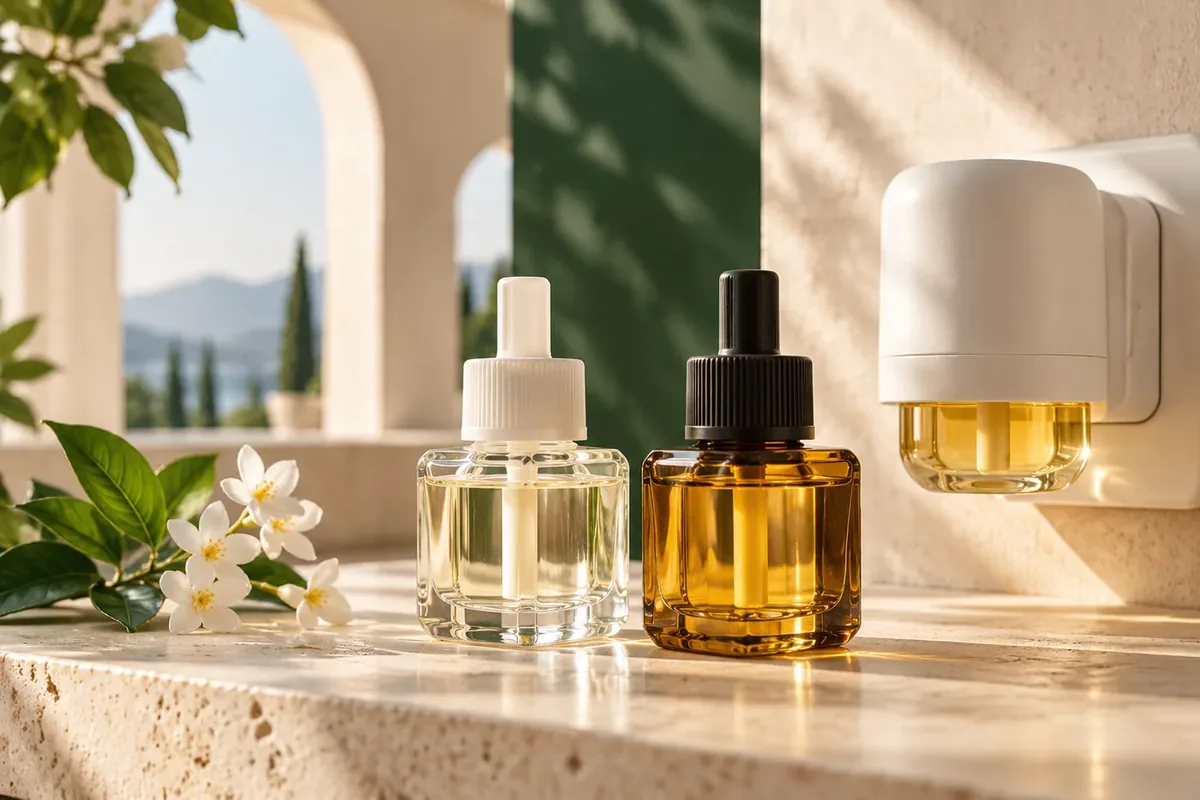
A refill may fail because of the bottle neck, thread, feed opening, seal, reservoir geometry or mechanical connection even if the fragrance seems suitable. Record interfaces from the real device specification or physical reference sample. Do not publish inferred measurements from a photo or claim compatibility with a named third-party model without permission and relevant actual evidence.
Buyer lists the components requiring exact matching.
Describe the liquid as a physical specification
Which information can affect delivery and material contact?

A fragrance brief alone cannot substitute for the relevant fluid description. Questions may involve the actual formulation revision, intended solvent system, viscosity range where applicable, temperature conditions and relevant safety information. The required parameters depend on the delivery mechanism and the equipment guidance; the guide must never invent numeric acceptable bands.
Buyer knows which parameters to request without fabricating acceptable values.
Trace the wetted materials
Which parts contact the proposed fluid?
Reservoirs, dip tubes, gaskets, pump elements and packaging closures may be exposed to the liquid for different periods. Visual similarity cannot establish chemical compatibility, and a result on one elastomer cannot automatically cover another. Trace the actual contact path with the equipment owner and determine which material information can legitimately be shared.
Buyer identifies which material mismatch might change the decision.
Distinguish a bulk oil from a sellable refill pack
What physical object will the customer reorder?

Bulk liquid, prefilled bottles, replacement cartridges and finished retail packs create different responsibilities. A bulk formula may be feasible while a proprietary cartridge or branded closure is not approved for supply. Specify the filling party, packaging owner, closure and unit of sale separately, rather than treating liquid feasibility as proof of full device-system manufacture.
Buyer can request a realistic quote for a defined physical deliverable.
Design a compatibility question that can actually be tested
What would success or failure mean?
A test request should name the specimen, relevant material or device, conditions, observed outcome and limitation. Leakage, deformation, loss of performance and visual changes are different questions. A short benchtop exposure is not by itself evidence of whole-device reliability, and a laboratory result on a sample is not automatic proof of every production lot.
Buyer asks for evidence capable of answering the project risk.
Assess scent performance without assuming a lifetime
How do usage conditions change consumption?
Duty cycle, temperature, fan setting, active hours, ambient conditions and selected fragrance behaviour can change consumption. A larger refill or stronger concentration does not guarantee a fixed number of days of service. Calculate a forecast only from verified use data for the target system; if data is absent, state the assumption openly and plan a relevant evaluation.
Buyer can separate modelled use from an actual performance claim.
Understand when a change weakens old evidence
Can an earlier result still support a changed refill?
A different solvent, perfume composition, seal grade, bottle, device or use condition may change the relevance of an earlier result. Not every label-artwork edit requires a new technical test; not every fluid change is harmless either. Compare the old tested configuration against the proposed one, then decide with qualified parties what needs review.
Buyer knows what evidence may need re-evaluation, not an automatic retest promise.
Read actual compatibility evidence rather than badges
Which report could really answer this question?
Marketing “fits most machines” badges, visual cartridge matches and generic standards lists do not prove specific use compatibility. Read an authorised original for its identified specimen, method, results and limitations. If an original is restricted, ask what facts can be confirmed through the existing sales process. LAEYO-specific records belong in Test Reports rather than being invented here.
Reader distinguishes an educational comparison from a verified test.
Turn the system facts into a refill buying brief
Start with the device or vessel, intended use, proposed refill physical form and the single compatibility uncertainty you most need resolved. Share a model reference or lawful sample information when available. Exact CAD drawings and proprietary device specifications need not become a first-contact gate; the supplier may ask for them only if necessary for the next technical decision.
Check evidence behind each sourcing recommendation
Use product-specific documents, relevant original guidance and confirmed market requirements when evaluating a proposed fragrance format or supplier.
Follow practical guides on refill evaluation
This topic archive should link only to genuine articles that provide original sourcing methodology, document references or named test-case assumptions. Avoid building twelve pages around nearly identical “universal diffuser oil compatibility” headlines. Article excerpts must show a specific reader outcome, real URL and source or review date when applicable.
Can diffuser oils be used in any scent diffuser?
No. Release mechanism, fluid specification, device guidance and contact materials differ; evaluate the exact configuration.
Are smart diffuser refills the same as waterless diffuser oils?
Not necessarily. One describes a device-related supply route and the other a product-format claim; specifications and fit require evidence.
What should I send to request a refill quote?
Start with the actual vessel or device, target supply unit, intended use and one important compatibility question.
Can I claim compatibility with a named competitor device?
Do not infer it from a matching bottle or generic description. Check technical evidence, rights and any relevant brand-use issues.
Does a scent sample prove long-term device compatibility?
No. A sensory sample is not a long-term liquid–material or whole-system evaluation.
Can a change in cap or seal affect compatibility?
It may if the new material or interface contacts the liquid or performs a critical sealing function; examine the actual change.
How should refill lifetime be estimated?
Only from a defined system, operating conditions and a supported consumption basis; avoid guaranteed days from bottle size alone.
What is the difference between bulk oil and filled refills?
Bulk oil is a liquid supply unit; filled refills include a specified container, closure and responsible filling/packaging process.
Is an IFRA document a machine compatibility report?
No. It addresses a distinct fragrance-standard conformity purpose and does not replace specific equipment testing.
Can a test of one material justify all plastics and gaskets?
No. Contact materials and test conditions must match the proposed system or require additional assessment.
Where can I check LAEYO-specific test results?
Use an actual authorised report and the Test Reports page if records are published; do not treat this guide as a report.
Do I need a device model number before asking a question?
Not necessarily for initial contact; explain what is known and what needs identifying, then share exact data when available.
Ask about the exact refill configuration
What single question should I send now?
A sourcing enquiry can begin before a buyer has every material identifier. State the known equipment, proposed liquid supply form, market, one fit or performance question and a preferred reply method. LAEYO can then confirm which service or evidence can be discussed without pretending a technical study has already passed.
Copying this brief does not submit an enquiry. Use the existing LAEYO Contact page for the actual request.