Original olfactive concept
Brand personality, reference adjectives and market positioning

Share a scent reference or the atmosphere you want your brand to create. LAEYO can discuss fragrance development for the intended product and release method; evaluation follows the agreed sample and actual device or container.
 CONCEPT VISUAL
A brand searching for a distinctive olfactive profile may need an exploration brief, while a purchaser with an installed diffuser fleet first needs a compatible medium discussion. These are different project questions, not three guaranteed LAEYO service packages. Choose the route that describes your starting position; the technical scope and commercial feasibility can then be reviewed against LAEYO’s verified services. A previous fragrance sample is useful context but cannot be assumed suitable for every delivery system.
Brand personality, reference adjectives and market positioning
Formula revision or known performance concern, subject to disclosure rights
Device model, contact path and desired change
Possible project starting points — not a list of verified ready-to-buy service packages.
A practical first brief names the intended product, audience, olfactive direction, release route, market and the uncertainty the buyer most wants resolved. Add a known packaging or equipment reference when relevant. You do not need a final ingredient list, finished packaging artwork or target production quantity simply to make an initial inquiry. When the buyer provides a benchmark, clarify whether it is an inspiration, a scent reference legitimately owned by the brand or a product to be differentiated from—not a request to copy proprietary material.
Product form and intended use
Olfactive reference, concentration concept, hardware or container
Final artwork, full commercial order, exact laboratory test plan
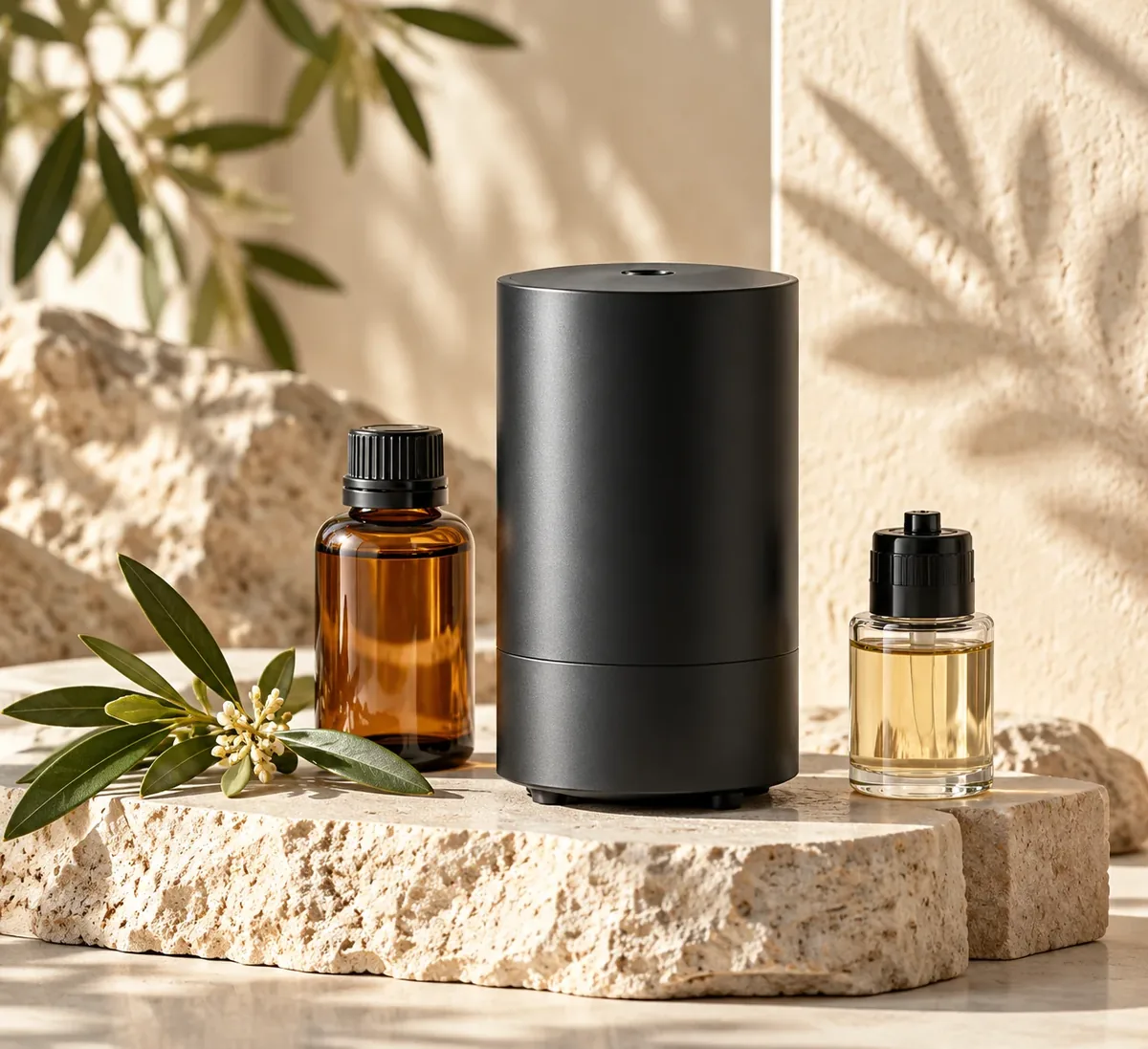
Describe the atmosphere in customer language and then identify which attributes actually require comparison: opening impression, lingering character, perceived intensity or compatibility with the intended use. Terms such as “natural”, “hypoallergenic”, “long-lasting” and “non-toxic” should never be introduced as tested product claims without specific substantiation. A fragrance moodboard can help discussion, but the approved formula, release format and market requirements—not the moodboard—will determine later product claims.
e.g., crisp herbal, warm woody or soft clean—illustrative descriptions only
What should users notice and in what space?
Do not convert creative adjectives into quantified performance or safety promises
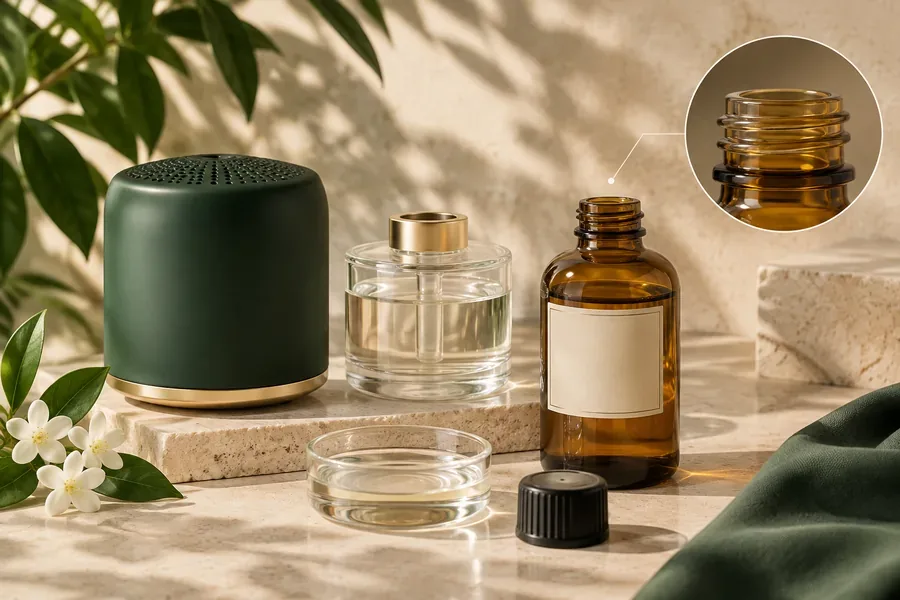
Liquid development is also a materials and delivery question. Evaluate the actual contact components, application conditions and mixture revision before discussing an adaptation. A fragrance concentrate is not automatically an approved finished refill, and an oil intended for one release system is not a universal replacement for another. If the buyer already owns equipment, one model reference is more useful than a broad “compatible with all diffusers” requirement.
Reed/evaporation path and container interface
Reservoir, seals, atomizer, pump or heating path as applicable
Sprayer assembly, target surface and labeled use
For development, identify the intended release route and contact system as constraints—not a claim that a given liquid fits a given device.
Before evaluating a prototype, agree the observation it is meant to support. For a scent concept this may be a structured sensory comparison under stated circumstances. For a defined refill it may be liquid–material interaction, device behavior or stability under specified storage conditions. The test method, time, sample and acceptance criterion are project-specific; nothing on this page represents completed LAEYO trials. A short bench observation is not proof of lifetime performance or regulatory acceptance.
Which sample best matches the intended olfactive direction under the agreed evaluation conditions?
What actual physical or material interaction requires a controlled comparison?
Who will decide, on which documented observations and which sample revision?

A development services page can explain how a project should be discussed without claiming a particular laboratory, proprietary equipment or guaranteed in-house chemistry. Once the supplier provides relevant first-party evidence, explain which work is performed internally, which is sourced and where the buyer can verify the physical process. The actual laboratory and personnel facts belong to the dedicated About page; actual production observations belong to Trust. A concept photograph must never stand in for such evidence.
Scope of formulation/briefing collaboration
Named location, relevant activity and authorised photo or record
Responsibility, confirmation and limits shown truthfully

Evidence requirements depend on the final application, market and material composition. Fragrance-related supplier declarations, SDS information, test reports and the brand’s product-label review serve different purposes. A product statement is not an IFRA organisation-issued factory certification; a concentrate document does not automatically describe a changed finished liquid. When discussing compliance, ask which exact mixture revision and use category the original document covers. The responsible specialist must review currently applicable market rules.
What it may answer
Specified use conditions for a particular fragrance mixture, subject to actual source
Observed result for a particular specimen and method
Product/market-specific claims and legal responsibilities
The buyer should ask whether a project uses pre-existing supplier know-how, customer-owned materials or new commissioned output—and how the parties intend to handle confidentiality, permitted reuse and any licence or transfer. A patented process, a scent direction and a finished formula are not interchangeable rights. Nothing on a general webpage transfers proprietary rights. Initial discussion can use high-level descriptors; detailed proprietary documents should follow actual agreed confidentiality arrangements when needed.
Identify whose information or rights existed before this project
Discuss which outputs are expected and who may use them
Clarify permissions, restrictions and contractual scope
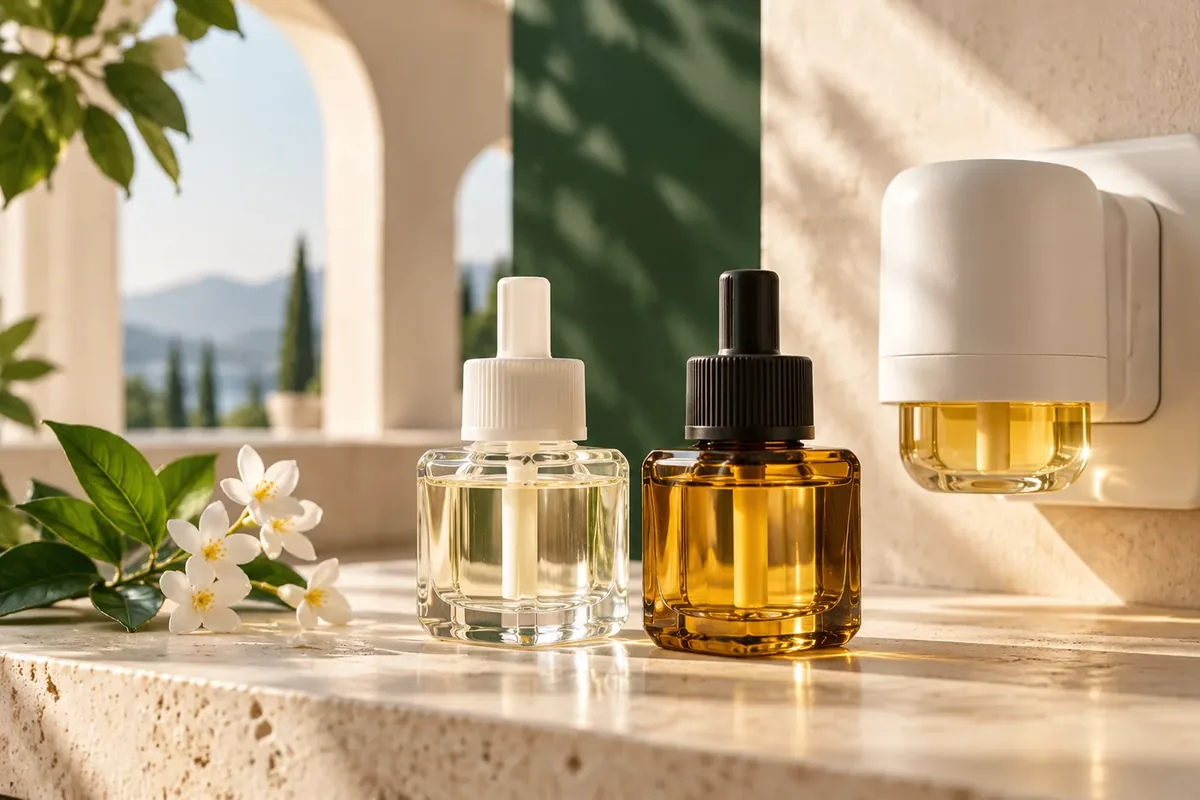
Use three explicitly hypothetical situations to demonstrate how the briefing question changes. A new home fragrance brand might begin with a calm woody profile and undecided diffuser medium. An established refill importer might need to evaluate a named reservoir against a revised liquid. A hospitality procurement team may have a scent direction and an established deployment format but require documented market and use conditions. These are instructional scenarios, not LAEYO client examples or performance proof.
Output to request: two comparable olfactive concepts and a recommended first technical question
Output to request: device and formulation gap analysis before sample selection
Output to request: specific product use and documentation scope discussion
Three illustrative fragrance development briefs — examples, not LAEYO client projects.
At the end of a development discussion, record the proposed sample type, its intended use, the known formulation or packaging revision and the evaluation question. Keep creative acceptance separate from device and material compatibility. Technical feasibility, sample quantity, fees, changes and expected timing must be confirmed for the actual project before an order or payment request. This is a short handoff, not a publicly promised fixed-stage manufacturing SLA.
Which scent route or descriptors are being evaluated?
What physical liquid or prototype will the buyer receive?
Which compatibility, compliance or cost question remains?
Development output: the agreed scent/use direction and the first unresolved evaluation question.
Keep direct answers in server-rendered English text. Do not use these questions to claim that LAEYO owns a particular process, guarantees device compatibility or offers unlimited iterations. The FAQs complement the brief and explain the scope of a responsible development conversation.
Yes. Start with the product form, intended use, scent direction and main question. Exact composition or rights-sensitive details can be discussed later if needed.
Do not assume this. The finished liquid, release route and contacting materials can differ, so suitability needs use-specific review.
A lawful reference can communicate an olfactive direction, but it does not grant rights to copy proprietary materials or guarantee an identical outcome.
Name the intended product, market if known, scent direction, delivery format and one decision you want the first sample to address.
No. The finished mixture, application category and market requirements need their own appropriate evaluation and source documents.
Not always. Tell us whether the pack or device is already fixed; relevant contact materials and use conditions will matter when evaluating a physical sample.
No. IFRA describes standards for safe use; it does not issue a factory certificate of conformity on behalf of mixture suppliers.
Not automatically. Claims depend on the specimen, actual equipment, test conditions, duration and documented findings.
Ownership and permitted use depend on actual project terms, background IP and agreements; a website description does not transfer rights.
The number and cost of revisions must be agreed for the particular project. This page does not promise unlimited free adjustments.
Yes. A model reference, intended format and main issue can support an initial discussion; further technical data may be needed later.
Clarify the sample or prototype to be evaluated and the acceptance question, then discuss scope and terms through the existing Contact page. **发布/SEO说明**:12 个问题按实际买家决策排列,前台可用原生 `<details><summary>…` 或展开文本;问题和短答在初始 HTML 内可抓取、移动端可访问。Google 2026 年 FAQ 富结果停止展示,因此不得把 FAQ Rich Results 列为本页绩效承诺,不创建额外FAQ管理系统。 —
Answers are based on the supplied page plan. Project-specific scope, pricing, compatibility and compliance must be confirmed against the actual project and original evidence.
Tell us the intended product format, the scent impression or experience you want to create, the target market if known and the main uncertainty to resolve. Hardware details or existing liquid references are useful only where relevant and available. We can discuss what information is needed to evaluate the specific request; there is no need to disclose a proprietary full formula or complete production contract on first contact.
You do not need to provide every technical drawing, final quantity or confidential formula before an initial discussion. Share only the project context and reference you are comfortable disclosing.
We plan a [home/commercial fragrance product] for [intended use]. Our scent direction is [description] and our main question is [formulation or medium concern]. Could you advise what information would be needed to evaluate a first development sample? Please reply via [contact].
Copying this brief does not submit an enquiry. Use the existing LAEYO Contact page for the actual request.
Each specialist page owns a distinct buyer decision. Move to the next route only when it matches the question your project needs to resolve.
Move from scent direction to a defined sample question.
Sampling & Prototyping ↗The four pages share the same navigation and Contact route. Their project scope, sample availability, packaging responsibilities, production terms and evidence remain subject to actual confirmation.